
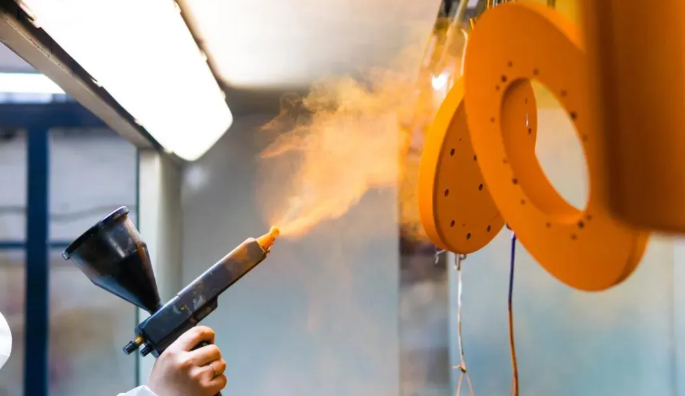
Brisbane finishing jobs that look identical on completion day tell very different stories after two or three summers outdoors. One finish retains its gloss, holds its colour, and shows no edge creep or blistering. The other is chalking at exposed faces, lifting at cut edges, and showing the particular orange-peel texture that indicates the film is separating from the substrate beneath. Both were powder-coated. The difference is not the process — it is every decision made before the powder gun was picked up. Understanding those decisions is what separatespowder coating in Brisbane that performs from powder coating that merely appears to.
Pretreatment Is Where Most Operations Cut Corners
The cured powder film is only as durable as the bond between it and the substrate, and that bond is entirely determined during pretreatment — the cleaning, degreasing, and chemical conversion stage that happens before any powder is applied. Aluminium that has not been through a proper conversion coating stage, typically chromate or zirconium-based treatment, presents a surface that powder adheres to initially but cannot maintain adhesion when moisture begins working at microscopic imperfections. The undercutting process that follows is slow and invisible until it produces visible blistering. Operations running a genuine multi-stage pretreatment system cost more to run than those doing a single wash stage. That cost difference is the explanation for why quotes vary and why the cheaper option frequently looks identical at handover and genuinely different eighteen months later.
Exterior Powder Chemistry Is Not the Same Product
Interior-grade polyester powders and exterior-grade powders both look like powder, apply like powder, and cure like powder. The difference is in the UV stabiliser package formulated into the resin. Brisbane’s UV index reaches levels that accelerate photo-oxidation in inadequately stabilised powder films – the process that produces chalking, colour shift, and progressive gloss loss on outdoor surfaces. Powder coating in Brisbane for anything with meaningful outdoor exposure requires superdurable or TGIC-free polyester chemistry specifically formulated for high UV environments. Operators who apply interior-grade powder to exterior applications are not necessarily cutting corners deliberately — some genuinely do not distinguish between the two. The client who does not ask which powder chemistry is being used for their outdoor application has no way of knowing which outcome they will receive.
Oven Temperature Consistency Affects the Entire Batch
Powder coating cures through a time-temperature relationship in the oven — the film needs to reach a specific temperature and hold it long enough for complete cross-linking to occur. Undercured powder is soft, has reduced chemical resistance, and chips more readily than a fully cured film. Overcured powder becomes brittle and may show discolouration, particularly on lighter colours. Operations with calibrated ovens and documented cure cycle management produce consistent results across a batch. Operations where oven temperature is approximate and cure time is estimated produce results that vary — sometimes within the same batch, which becomes apparent when components are assembled, and adjacent parts have slightly different gloss levels or flexibility.
Colour Consistency Across Runs Is a Process Discipline
Powder coating projects that require multiple production runs – facade components delivered in stages, replacement parts added to an existing installation, furniture sets produced over several weeks — expose another variable that clients rarely anticipate. Colour consistency between runs depends on powder batch management, film thickness control, and oven consistency. Minor variations in any of these produce colour and gloss differences that are invisible on individual components and immediately obvious when they sit next to each other on site. Operations that document film thickness readings, manage powder batch numbers across a project, and run calibration checks between production runs produce results that assemble without visible variation. Those that do not leave clients managing discrepancies after installation, when the options for remediation are considerably more disruptive.
Rework Reveals the Original Specification
Failed powder coating cannot be patched. The entire coating must be stripped to bare metal — chemically or mechanically — the substrate pretreated correctly, and a full recoat applied. When rework is required on a project, the stripping process invariably reveals what the original pretreatment actually was. Thin or absent conversion coating becomes obvious once the failed film is removed. It is an expensive way to confirm that the original specification was inadequate.
Conclusion
Powder coating in Brisbane that performs across years of Queensland outdoor exposure is the product of decisions made entirely before application begins — pretreatment method, powder chemistry, oven calibration, and batch management. Brisbane’s UV intensity and humidity compress the timeline between adequate and inadequate specification, becoming visible. Clients who ask the right questions before committing to an operator consistently receive better outcomes than those who evaluate on price and presentation alone.