

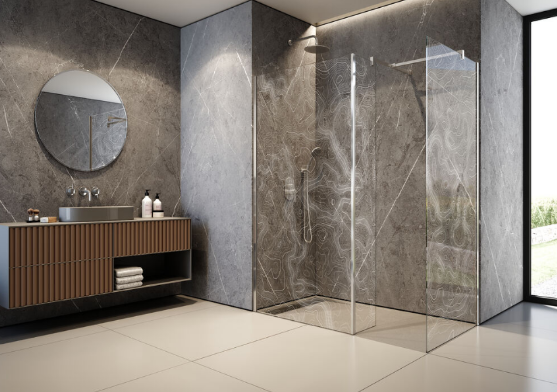
Most individuals only consider their shower screen after the tiler has completed and the space left for it ends out somewhat incorrect. That single moment, more than any other remodelling choice, explains why so many bathrooms wind up with a screen that seems slapped on rather than integrated in. Custom shower screens tackle this by working from the space as it truly is, uneven wall and all, instead of expecting the area to accept a conventional size.
Walls Are Rarely Straight
Plasterers and tilers work to a tolerance, not a perfect line, so a wall that looks flat to the eye can lean out of true by a noticeable margin from top to bottom. A standard screen assumes a straight wall and gets forced into place with silicone doing the job proper measuring should have done. A tailored screen accounts for this lean before the glass is cut, so the seal sits evenly rather than bulging thicker at one end. Anyone who has watched silicone crack early has usually seen this shortcut at work.
The Return Panel Problem
Walk-in screens without a door rely on a side panel, known as the return, to stop water escaping across the floor. Off-the-shelf kits often supply a fixed return width regardless of shower head position, so water can still find its way past the edge on a strong extract fan or a powerful mixer. A screen designed around the actual shower head position lets the return panel sit exactly where splashing occurs rather than where a factory decided it should. This is the detail that separates a dry bathroom floor from a damp one every morning.
Hinges Need Something Solid
A hinge bolted into tile alone will eventually work loose, because tile adhesive isn’t designed to take repeated pulling force. Custom shower screens are specified alongside the wall build-up, so fixings can sit over solid backing boards or noggins rather than being guessed at after tiling is complete. Nobody notices this decision until a hinge starts sagging noticeably, at which point retiling becomes the only realistic fix. Getting it right the first time avoids a repair job far more disruptive than the original installation.
Glass Thickness Changes the Sound
Thinner glass flexes slightly when a door closes, producing a hollow clatter that grows more noticeable the longer a household lives with it. Heavier glass, chosen to suit the actual opening rather than a generic standard, closes with a dull thud instead. This sounds trivial until early risers start waking the rest of the house every morning. Matching glass weight to the panel dimensions, rather than using whatever the manufacturer stocks, quietly fixes a problem most people assume is just how showers sound.
Frames Yellow, Frameless Doesn’t
The white silicone seals around chrome and powder-coated frames discolour with soap residue and hard water sooner than most homeowners anticipate, but they age rather well. Because there is less trim to highlight the contrast, frameless designs sealed with thin transparent beads more successfully conceal this ageing. Even if both were cleaned similarly often, anybody comparing an older framed screen to a frameless one in a comparable bathroom would typically notice that the framed one appears worn out first.
Renovation Sequencing Matters
Ordering a screen before tile choices are locked in causes more return visits than almost any other bathroom mistake. Tile thickness affects the finished floor height, which shifts where the screen’s bottom track needs to sit against the shower tray lip. Measuring after tiling, rather than guessing from a floor plan, removes this error and saves an awkward second visit.
Final Thoughts
Most of this only becomes apparent after living with a poorly fitting screen, but if someone points it out, none of it is difficult. Because bathrooms are full of tiny, room-specific details that generic sizing cannot account for, custom shower screens are necessary. Decisions taken prior to the glass being cut are responsible for the wall lean, the return panel, the fastening points, and even the sound of the door shutting. What really distinguishes a shower that feels thoughtful from one that just fills a void is making those choices correctly.