

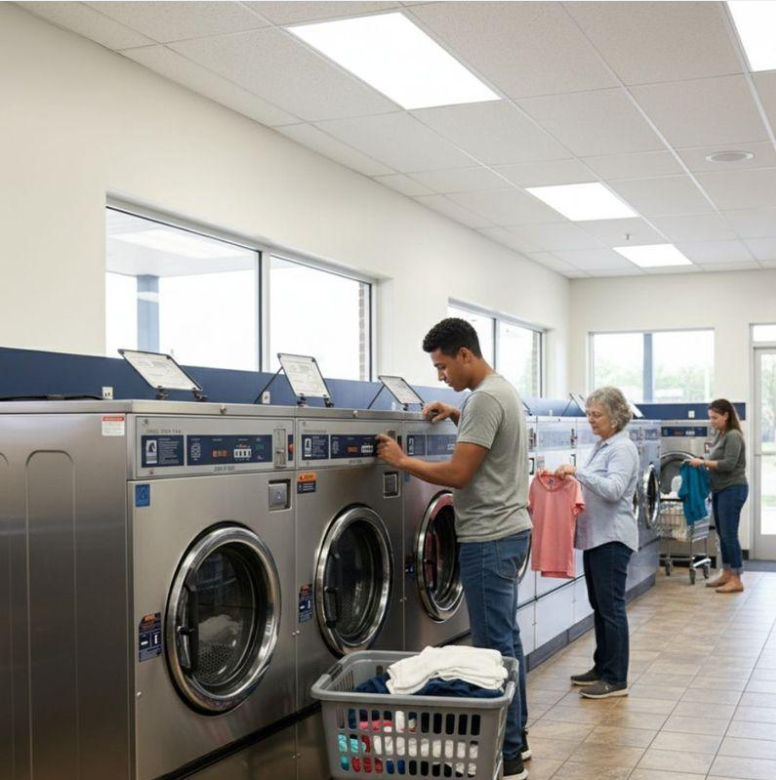
Starting a laundromat business can be an attractive opportunity for entrepreneurs looking to enter the growing laundry and garment-care industry. Busy professionals, students, families, hostels, and businesses often need convenient and reliable laundry services. A well-managed laundromat can serve these customers through self-service washing, wash-and-fold packages, ironing, pickup and delivery, and commercial laundry contracts.
However, opening a laundromat involves more than purchasing washing machines and renting a shop. You need to understand your target market, select the right location, calculate operating expenses, arrange water and electricity facilities, and develop a reliable customer service system.
In India, the business can operate as a self-service laundromat, a full-service laundry shop, a pickup-and-delivery service, or a combination of these models.
This guide explains how to start a laundromat business, how much investment may be required, which equipment you need, what registrations to check, and how to build a profitable laundry operation.
What Is a Laundromat Business?
A laundromat is a business that provides washing and drying facilities to customers. In a traditional self-service laundromat, customers operate commercial washing machines and dryers themselves, usually paying for each wash or drying cycle.
In a full-service laundry business, employees handle the entire process, including washing, drying, folding, ironing, and packaging.
Common laundromat services include:
- Self-service washing and drying.
- Wash-and-fold services.
- Ironing and steam pressing.
- Pickup and delivery.
- Bedding and blanket cleaning.
- Commercial linen washing.
- Special garment-care services.
The business model you choose will determine your investment, equipment requirements, staffing needs, and pricing strategy.
Why Start a Laundromat Business?
Laundry is a recurring household and business requirement. Customers who are satisfied with the quality and convenience of a laundry service may return every week.
Here are some reasons entrepreneurs consider this business.
1. Recurring Customer Demand
Students, working professionals, families, and small businesses regularly need clean clothes, towels, bedsheets, and uniforms. This creates opportunities to develop repeat customers.
2. Multiple Revenue Opportunities
A laundromat can earn through washing cycles, drying, ironing, wash-and-fold packages, subscriptions, and commercial contracts.
3. Opportunities in Urban Areas
Areas with apartments, hostels, paying guest accommodation, universities, and office complexes can offer a suitable customer base.
4. Potential for Business Expansion
After establishing one successful outlet, you may expand through additional branches, delivery services, franchise locations, or business-to-business laundry contracts.
5. Technology-Based Operations
Digital payments, online booking, automated billing, order tracking, and customer notifications can make laundry operations more convenient.
Different Types of Laundromat Business Models

Before investing money, decide which type of laundry business you want to establish.
1. Self-Service Laundromat
Customers visit your outlet, select a washing machine, pay for a cycle, and wash their clothes themselves.
Advantages:
- Fewer employees may be required.
- Customers handle much of the washing process.
- Payment can be automated.
- Suitable for areas with students and working professionals.
Challenges: You need clear instructions, machine maintenance, customer support, and reliable payment systems.
2. Full-Service Laundry Business
Employees receive customers’ clothes and manage washing, drying, folding, and packaging.
Advantages:
- Convenient for customers.
- Allows per-kilogram and per-item pricing.
- Can offer ironing and garment-care services.
- Suitable for households and busy professionals.
3. Pickup-and-Delivery Laundry Service
Customers book laundry collection through a website, phone, or messaging app. Your business collects the clothes, processes them, and delivers them after cleaning.
This model can serve a larger geographical area, but it requires delivery planning, order tracking, and reliable turnaround times.
4. Commercial Laundry Service
This model focuses on bulk washing for businesses such as:
- Hotels and guesthouses.
- Hostels and student accommodation.
- Hospitals and clinics.
- Salons and spas.
- Gyms and fitness centres.
- Restaurants and catering businesses.
Commercial clients can provide regular orders, but they may expect competitive pricing, consistent quality, and dependable delivery schedules.
5. Laundry Franchise
A franchise allows you to operate under an established brand and business system. Depending on the agreement, the franchisor may provide training, branding, technology, equipment guidance, and marketing support.
Before purchasing a franchise, examine the franchise fee, royalty, total investment, territory rights, equipment costs, and contract termination conditions.
How to Start a Laundromat Business Step by Step
Starting a laundromat becomes easier when you follow a structured business plan.
Step 1: Conduct Market Research
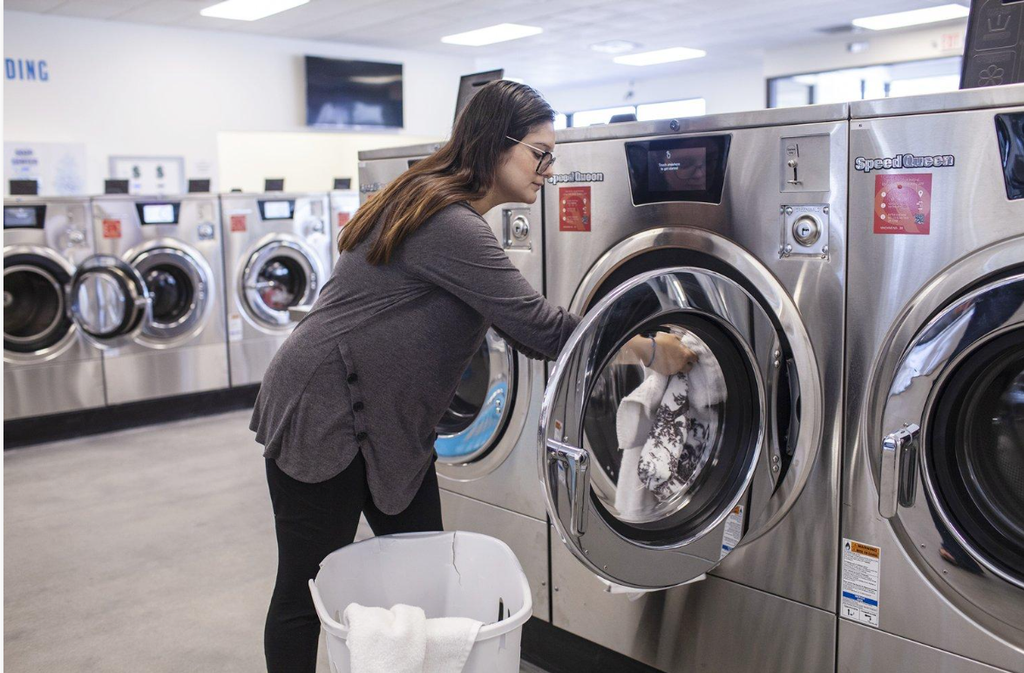
Start by understanding whether people in your chosen area need a laundry service.
Research:
- Number of apartments and residential communities.
- Nearby colleges and universities.
- Hostels and paying guest accommodation.
- Working professionals and rental housing.
- Hotels, salons, gyms, and other commercial customers.
- Existing laundry and dry-cleaning businesses.
Visit competitors and compare their prices, service quality, delivery times, customer reviews, and operating hours.
Try to identify a specific customer problem. For example, customers may need faster delivery, transparent pricing, better garment handling, or convenient doorstep pickup.
Step 2: Choose Your Business Model
Select the model that matches your budget, location, and operational experience.
A self-service laundromat may suit an area with students and apartment residents who prefer to operate machines themselves.
A full-service laundry may work better where customers want their clothes collected, cleaned, ironed, and delivered.
If you are starting with limited experience, you can begin with wash-and-fold services and outsource specialist dry cleaning. This avoids the expense and complexity of purchasing dry-cleaning equipment immediately.
Step 3: Prepare a Laundromat Business Plan
A business plan helps you understand the investment required and how the business will earn money.
Include the following:
Business overview: Describe your laundromat concept, services, location, and target customers.
Market analysis: Identify competitors, customer demand, and local pricing.
Startup budget: Estimate equipment, premises, installation, registrations, and initial marketing expenses.
Operating expenses: Calculate rent, wages, electricity, water, detergents, repairs, delivery, and packaging.
Pricing strategy: Decide whether customers will pay per wash cycle, per kilogram, per garment, or through monthly packages.
Marketing strategy: Explain how you will attract customers through local advertising, digital marketing, partnerships, and referrals.
Financial projections: Estimate monthly revenue, operating costs, break-even sales, and working capital requirements.
Step 4: Select the Right Location
Location is one of the most important factors in a laundromat’s success.
Look for premises near:
- Residential apartments.
- Student hostels and PGs.
- Colleges and universities.
- Office complexes.
- Busy residential streets.
- Areas with a high concentration of rental accommodation.
A suitable location should have sufficient space for machines, customer movement, garment sorting, folding, storage, and service counters.
Before signing a lease, verify:
- Reliable water supply.
- Adequate drainage and wastewater arrangements.
- Sufficient electrical capacity.
- Ventilation and heat management.
- Permission for commercial laundry activity.
- Accessibility for customers and delivery vehicles.
- Suitable rent and lease conditions.
Do not choose a location based only on low rent. A cheaper property without adequate water, drainage, or electrical infrastructure may become expensive to modify.
Step 5: Estimate Your Startup Investment
The investment required depends on the number of machines, location, business model, interiors, and whether you process clothes yourself.
The following figures are illustrative planning ranges for India, not supplier quotations or guaranteed costs.
| Business setup | Indicative investment |
|---|---|
| Collection and delivery outlet | ₹3–8 lakh |
| Small laundry processing outlet | ₹8–25 lakh |
| Medium laundry and delivery operation | ₹25–60 lakh |
| Larger commercial laundry facility | ₹60 lakh to several crore |
A small self-service laundromat with multiple commercial machines may require a substantial investment in equipment and utilities. A collection point that outsources washing can start with less equipment, but it depends on a reliable processing partner.
A sample budget for a small processing outlet could look like this:
| Expense | Illustrative amount |
|---|---|
| Commercial washing and drying machines | ₹5,00,000 |
| Plumbing and electrical installation | ₹1,50,000 |
| Shop deposit and initial setup | ₹1,00,000 |
| Pressing and folding equipment | ₹75,000 |
| Sorting, tagging, and storage | ₹50,000 |
| Branding and initial marketing | ₹25,000 |
| Initial working capital and contingency | ₹1,00,000 |
| Total | ₹10,00,000 |
Actual costs will vary according to machine capacity, new or refurbished equipment, local rent, installation requirements, and working capital needs. Obtain written quotations before making an investment decision.
Step 6: Purchase the Required Equipment
Commercial-grade equipment is important because laundromats process more loads than ordinary household laundry operations.
Your equipment requirements may include:
Commercial washing machines: Choose capacity according to expected customer volume and the types of garments you will process.
Commercial dryers: Dryers can reduce turnaround time and help during rainy or humid weather.
Steam irons and pressing tables: Useful for ironing shirts, trousers, uniforms, and other garments.
Folding tables: Provide a clean and organised area for preparing completed orders.
Laundry baskets and sorting racks: Help separate incoming clothes by customer, colour, fabric, and cleaning requirements.
Water treatment equipment: Depending on local water quality, filtration or softening may help protect machines and improve washing consistency.
Payment and billing systems: Use digital payment options and a system for recording customer orders and payments.
Before buying, compare machine capacity, water and electricity consumption, warranty, spare-parts availability, installation costs, and maintenance support.
Step 7: Arrange Water, Electricity, and Drainage
Laundry operations depend heavily on utilities.
Calculate how much water your machines will use at expected daily capacity. Check whether your premises can support the required electrical load, including dryers and other equipment.
You should also plan for:
- Proper water storage where needed.
- Suitable drainage and wastewater disposal.
- Safe electrical connections.
- Ventilation and heat removal.
- Equipment servicing access.
- Emergency shut-off arrangements.
Commercial washing can produce wastewater containing detergents and other residues. Confirm applicable discharge and pollution-control requirements with the relevant local authorities before operating.
Step 8: Complete Registrations and Local Permissions
The registrations and permissions required depend on your business structure, location, scale, employees, and equipment.
In India, check the following:
Business structure: You can consider a proprietorship, partnership, LLP, or private limited company, depending on ownership and liability requirements.
Shop and Establishment registration: Check the applicable state rules for commercial premises and employees.
Municipal trade licence: Confirm whether your local municipal authority requires a trade licence for the proposed activity.
GST registration: Check the applicable GST registration threshold and any other conditions that may require registration. Speak with a qualified tax professional about invoicing and tax treatment.
Udyam registration: Eligible small businesses may register as MSMEs through the official Udyam portal. Registration is free.
Pollution-control permissions: Depending on the scale, wastewater discharge, and process, you may need to obtain consent or other approvals from the State Pollution Control Board.
Fire and electrical safety: Check local fire-safety requirements and ensure that electrical installations meet applicable standards.
Water and drainage permissions: Confirm whether the premises and planned water use are permitted.
If you plan to offer dry cleaning using chemical solvents or install steam boilers, additional safety and regulatory requirements may apply.
Do not assume that every laundry business needs exactly the same licences. Confirm the requirements for your particular premises and operating model before purchasing equipment or starting operations.
Step 9: Hire and Train Employees
The number of employees depends on the business model and daily order volume.
A small full-service laundromat may need:
- Laundry operator.
- Washing and drying assistant.
- Ironing and folding staff.
- Customer service representative.
- Delivery personnel, if required.
Train employees to sort clothes correctly, read care labels, use appropriate cleaning products, operate machines safely, and handle customer complaints.
Step 10: Set Your Laundry Pricing
Your prices should cover operating expenses while remaining competitive.
Possible pricing methods include:
- Per-kilogram washing charges.
- Per-item ironing charges.
- Wash-and-fold packages.
- Self-service charges per machine cycle.
- Express-service fees.
- Monthly household subscriptions.
- Bulk commercial contracts.
For example, you might offer separate packages for regular washing, washing and ironing, and premium garment care.
Research local competitors before setting prices. Avoid charging too little simply to attract customers because electricity, water, detergent, labour, and delivery expenses can reduce your margins.
Step 11: Develop a Garment Tracking System
Clothing management is one of the most important parts of laundry operations.
A lost, mixed-up, or damaged garment can lead to customer complaints and negative reviews.
Create a process that includes:
- Recording each incoming order.
- Counting and checking garments.
- Attaching a unique customer or order tag.
- Separating clothes by washing requirements.
- Recording cleaning and pressing status.
- Checking the completed order.
- Packaging and recording delivery.
For expensive or delicate garments, document their condition when received and explain any cleaning limitations to the customer.
Step 12: Promote Your Laundromat Business
Marketing helps customers discover your business and understand why they should choose your service.
Google Business Profile: Add your address, opening hours, contact information, services, and photographs so nearby customers can find you.
WhatsApp Business: Share price lists, receive bookings, and send order updates.
Social media: Post service demonstrations, customer feedback, promotional offers, and useful garment-care tips.
Local partnerships: Connect with hostels, PG owners, apartment associations, gyms, salons, and small hotels.
Referral programmes: Offer a reasonable discount or reward to customers who introduce new clients.
Launch offers: Consider a first-order promotion or introductory package to encourage trial purchases.
Focus on consistent service quality. Customer recommendations can be more valuable than short-term discounts.
Frequently Asked Questions About Starting a Laundromat Business
1. How much does it cost to start a laundromat business in India?
A small collection outlet may require a few lakh rupees, while a processing outlet with commercial washers and dryers may require approximately ₹8–25 lakh or more. Larger commercial facilities can require considerably higher investment.
2. Is a laundromat business profitable?
It can be profitable when the business attracts regular customers, maintains good machine utilisation, controls operating expenses, and provides reliable service. Profit is not guaranteed and depends on local demand and costs.
3. What equipment is needed to start a laundromat?
Common equipment includes commercial washing machines, dryers, steam irons, pressing tables, folding tables, sorting racks, laundry baskets, garment tags, and billing systems.
4. How much space is required for a laundromat?
Space depends on the number of machines, customer seating, sorting areas, storage, and whether you offer pickup and delivery. A small outlet may begin with a few hundred square feet, but the layout and utility requirements matter more than a fixed size.
5. Can I start a laundromat business from home?
You may be able to begin a small laundry service from home if local zoning, residential-use rules, water, drainage, electricity, and other applicable permissions allow it. A commercial self-service laundromat generally requires a suitable customer-accessible premises.
6. Do I need a franchise to start a laundromat?
No. You can establish an independent laundry business or purchase a franchise. An independent outlet offers greater control, while a franchise may provide an established brand and operating support in exchange for fees and contractual obligations.
7. How can I attract customers to my laundromat?
Use local search listings, WhatsApp Business, social media, introductory offers, referral programmes, and partnerships with hostels, apartments, gyms, and hotels.
8. Is a self-service laundromat suitable for India?
It can work in locations where customers value convenient machine access, such as student areas, high-density apartments, and neighbourhoods with working professionals. Research local customer habits before investing in a self-service-only model.
Conclusion
Starting a laundromat business requires careful planning, the right equipment, a suitable location, and a strong understanding of customer needs. Entrepreneurs can choose from self-service laundromats, full-service laundry outlets, pickup-and-delivery operations, and commercial laundry services.
Begin by researching your local market, selecting a business model, preparing a realistic budget, and confirming the water, drainage, electricity, and regulatory requirements. Invest in reliable equipment and establish a garment-tracking process from the beginning.
With consistent cleaning quality, transparent pricing, efficient operations, and strong customer relationships, a laundromat can develop into a sustainable service business.