

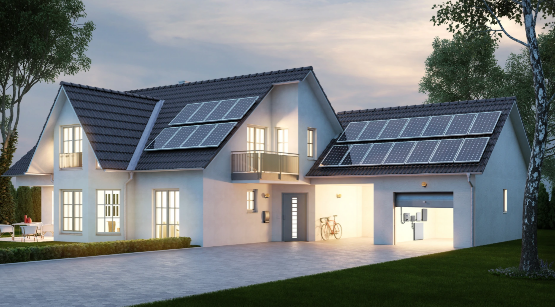
Most people give all the credit to solar panels. That is understandable — they are the visible part, the thing you can point to on a rooftop. But panels alone are only half the equation, and in many ways, the less interesting half. Solar energy storage is where the real shift is happening, and most of the conversation still misses the point.
The Curtailment Problem
There is a problem in the solar industry that does not get enough attention. It is called curtailment. When solar systems produce more electricity than the grid can handle at a given moment, operators switch the surplus off. It does not go anywhere useful. It is not saved. It is wasted. This happens in places with high solar adoption — not because the panels are faulty, but because grids were built around sources that could be adjusted on demand. Solar does not work that way. It generates when the sun is out, whether demand is there or not. Storage changes that entirely, not by producing anything new, but by holding what would otherwise be discarded.
Rewriting Grid Logic
Electricity grids have always run on a deceptively simple principle — produce exactly what is being consumed, in real time. It worked when power stations could be throttled up or down. It works less well when the input is sunlight. Solar energy storage breaks this old constraint. Energy captured during the sunniest part of the day can be held back and released in the evening when people are home and demand is genuinely high. That sounds simple, but the implications run deep. Solar no longer needs to be propped up by fossil fuel backup to remain dependable. Storage handles that job instead, and without any emissions involved.
What Blackouts Actually Reveal
Many solar panel owners get a rude surprise during a power cut — their panels stop working. This is not a malfunction. It is a deliberate safety feature. Grid-tied systems shut down during outages so electricity cannot flow back through the lines while engineers are working on them. Without storage, a house with a fully functioning solar setup goes dark the same as every other house on the street. With storage, the system separates from the grid and keeps running on its own. In areas where outages last for long periods or arrive without warning, that ability matters greatly.
When Old Batteries Find New Purpose
One of the less obvious threads in the solar energy storage story involves batteries that have already had a first life elsewhere. Electric vehicle batteries lose enough capacity over time that they are no longer suited for powering a car, but they still hold a considerable charge — enough to be genuinely useful when kept in one place. Rather than sending them to recycling or landfill, a growing number of projects are putting them to work in homes and small businesses as storage units. The environmental case for solar storage usually centres on clean generation, but this side matters too. Extending the life of a battery that already exists is a meaningful step in reducing waste.
Storage Beyond the Single Household
Not every solar storage conversation needs to start and end with the individual homeowner. Shared storage projects are already running in remote communities, social housing developments, and off-grid villages in different parts of the world. The model works like a communal energy reserve — households put in and draw from it together. This makes storage workable for people who could not justify a standalone system, and it challenges the assumption that energy flows only from large institutions down to passive consumers. A community managing its own reserve is doing something quite different from that.
Conclusion
Solar energy storage is not a refinement of solar power — it is what makes solar worth relying on. Without it, generation and consumption stay subject to timing and weather. With it, there is actual control over when and how energy is used. The bigger shift happening here is less about the technology itself and more about who gets to hold energy on their own terms. That question is only getting harder to ignore, and solar storage is why.